

Introducing a New Baby to Your Dog: A Guide for Expecting Parents
Congratulations on growing your family! As an expecting parent, you want your baby's arrival home to be a positive experience for everyone, including your furry friend. Around 65 million U.S. households own at least one dog, with many families treating their pets as family members.
Thoughtfully introducing a new baby to your dog is essential to help ensure a safe and happy home for everyone. You'll want to prepare your pet for the changes a baby brings, from new sounds and smells to an updated routine. This guide will help you every step of the way to make the transition smoother for both your pet and your family.
Why Preparing Your Dog for a Baby Matters
Your canine companion is perceptive and can sense changes in their environment and your emotions. They may notice new furniture, baby items and the overall excitement or nervousness in the household, which can create confusion and stress.
Pups, especially those who have been the center of attention, may feel neglected when a new baby arrives. This shift can lead to feelings of jealousy and anxiety, which may manifest in behavioral issues.
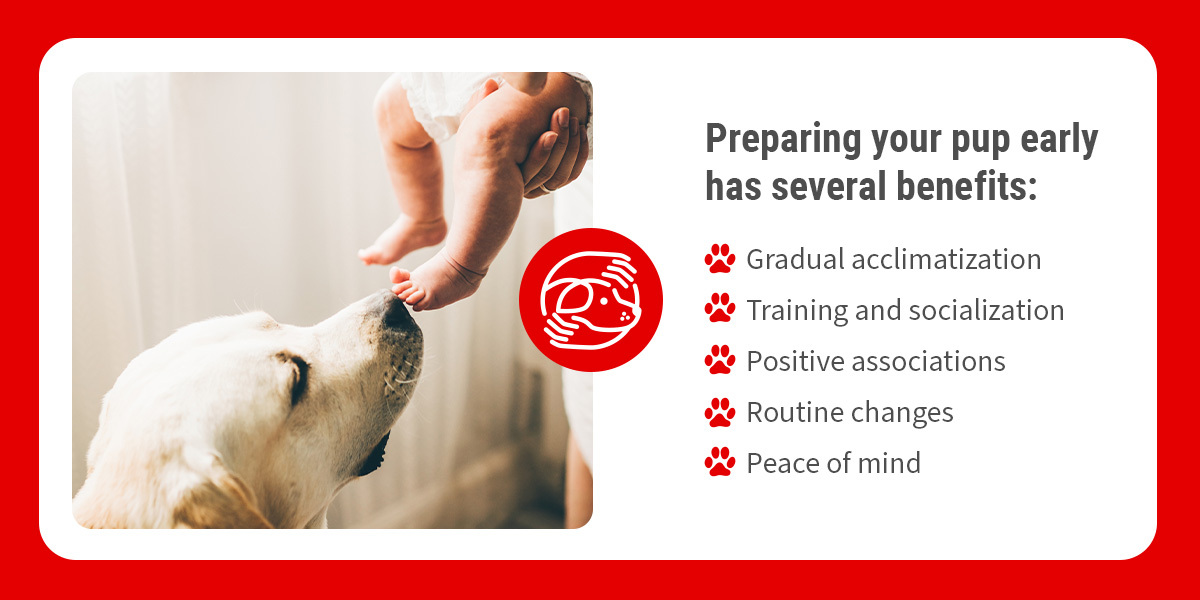
Just like humans, dogs require time to adjust to major life changes. They need space — mentally and physically — to process these changes. Preparing your pup early has several benefits:
- Gradual acclimatization: You have nine months to prepare for a new family dynamic. This time can be used to gradually introduce your dog to the changes that will occur.
- Training and socialization: Teaching or retraining your furry friend basic obedience skills can make managing their behavior easier when the baby arrives.
- Positive associations: Associating new experiences with rewards can help your dog develop a positive outlook towards the baby.
- Routine changes: Anticipating and implementing changes to your dog's daily routine before the baby arrives can minimize anxiety.
- Peace of mind: Preparing your fur baby in advance will help you feel more confident and relaxed when the baby comes home.
A well-prepared dog is less likely to exhibit stress-related behaviors. However, if they show signs of anxiety or fear, you should consult a certified behavior professional to provide tailored strategies that will help your dog adjust.
Understand Your Dog's Behavior and Needs
As your pregnancy progresses, you'll notice that your cuddle buddy may become more affectionate and want to cuddle or follow you closely. They might also become overprotective, barking at strangers or being wary of anyone getting too close to you. Some dogs may exhibit behavioral issues like destructive chewing as a response to the changes happening in the household. These behaviors are not spiteful but rather a sign of confusion or anxiety.
Bringing a new baby home is not the same as introducing protective dogs to a new person. Your canine friend will see the difference between adults and your baby, but they may not totally understand that they are also human. Many dogs may initially show excitement and curiosity through sniffing and exploring when they first meet the baby. As the novelty wears off, some dogs will seem pretty relaxed, while others may become bewildered or anxious.
Canines communicate their discomfort through body language. Signs to watch for include:
- Trembling or shaking.
- Tail tucked between the legs.
- Whale eyes.
- Panting or excessive yawning.
- Licking lips.
- Ears pinned back.
If your pooch is pacing near your baby, it may also indicate anxiety or agitation. This behavior is similar to a human pacing nervously. Growling or barking at the baby is a clear sign that they're uncomfortable around the baby and can be a precursor to more aggressive reactions.
On the other hand, some dogs may go out of their way to avoid contact with the baby when they feel nervous or unsure about the new family member.
Never leave infants and dogs together unsupervised, no matter how calm everything seems. Give your furry friend the time and space to get used to their new sibling.
How to Prepare Your Dog for a New Baby's Arrival
There are various ways to prepare your whole family before the new baby comes home. Follow these tips for introducing your dog to your baby safely.
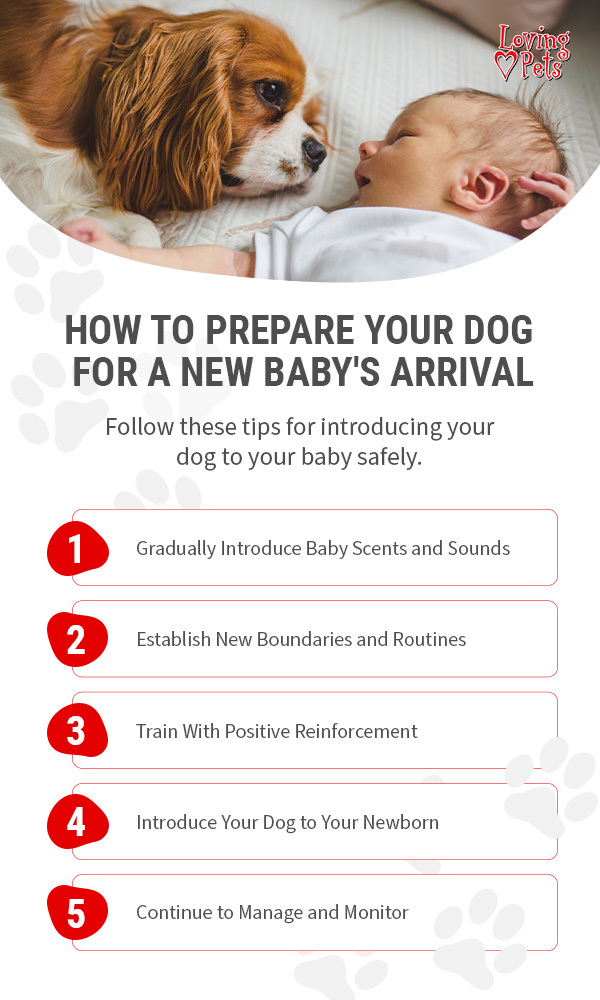
1. Gradually Introduce Baby Scents and Sounds
You can get your dog used to baby sounds and smells by using baby items and recordings. Start by unwrapping your little one's supplies like toys, car seats and high chairs and introducing them to your dog one at a time. Use baby lotions, shampoos or powders on yourself to help your dog associate these scents with a familiar person and create a positive connection to the baby's smell.
To get your dog used to baby sounds, download or find recordings of a baby crying, cooing and gurgling on YouTube. Play these sounds at a low volume while your dog is eating or playing with their favorite toys. Gradually increase the volume as they become more comfortable with the sounds. Reward your dog with treats and attention to reinforce the idea that these sounds are associated with positive experiences.
You can also send home an article of clothing or a blanket that the baby used while you're still in the hospital for your dog to smell. This will help them become familiar with the baby's scent before bringing your child home.
2. Establish New Boundaries and Routines
One of the first steps when expecting is to set up the baby's room. Doing so a couple of months prior to the due date can help your dog adjust to the changes slowly and feel less overwhelmed.
You'll need to decide if they will be allowed in the nursery. If they will be, allow them to inspect the room. If not, install baby or dog gates if necessary.
Start teaching your dog what areas are off-limits, such as furniture where the baby will be. Use positive reinforcement to encourage your furry friend to stay in their designated space.
Alternatively, install baby gates to restrict access to certain areas. Your dog will be able to see inside and not feel excluded. Remember to create designated “safe zone” areas where your pooch can relax while still being close to the family.
Dogs love their routine, so it's important to try and stick to them as much as possible. However, if you plan to change walk times or feeding schedules, start transitioning to the new routine gradually one to two months before the baby arrives.
3. Train With Positive Reinforcement
To create a safe and harmonious environment before your little one arrives, it's essential to prepare your dog with some training. Even if they have received puppy training, it's a good idea to reinforce some basic commands and address any unwanted behaviors.
Use positive reinforcement techniques for dogs to ensure they know these basic commands:
- Sit: This command teaches your dog to control their impulses and settle down when needed.
- Stay: When you need to focus on the baby, this command will keep your dog in one place.
- Down: Teaching your dog to lie down can help them relax and stay calm, especially during busy times with the baby.
- Come: In situations where you need to ensure your fur baby's safety, this command is essential for calling them to you.
- Leave it: This command helps prevent your dog from grabbing or chewing on baby items — or anything they shouldn't have.
- To your spot: Using this command teaches your dog to settle in a designated area, which can be useful during feeding or diaper changes.
- Wait: When you need your excited furry friend to pause before entering a room or going down a staircase, use this command.
Use treats, praise and affection to reward your dog for successfully following these commands or displaying calm and gentle behavior around baby-related stimuli. This reinforces the desired behavior and encourages them to repeat it. High-value training treats can motivate your dog to engage and learn new commands.
4. Introduce Your Dog to Your Newborn
Introducing a newborn to a dog for the first time should be a calm, controlled and positive experience for both the dog and the family. Here's a step-by-step guide to introducing your baby to your dog:
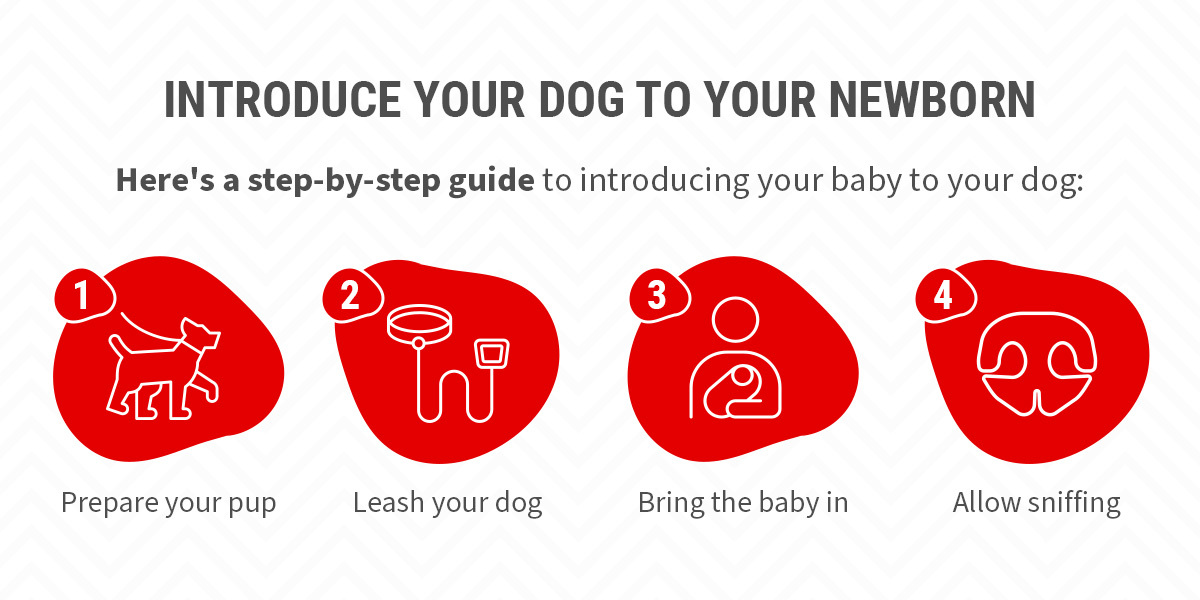
- Prepare your pup: Have someone take your dog for a walk or host a play session to expend your pooch's energy before bringing them home to the new baby. Prepare treats in advance and keep them within easy reach for rewarding calm behavior.
- Leash your dog: Have someone hold your dog on a leash to ensure control during the introduction, especially if they like to jump or get too excited.
- Bring the baby in: Select a quiet room for the introduction. Speak to your dog in a calm, cheerful voice to create a positive atmosphere.
- Allow sniffing: If your dog is calm, allow them to sniff the baby's feet or blanket while you hold them. Keep the interaction brief and positive. Praise your dog for gentle behavior and reward them with treats.
As you settle into a routine with your baby, include your dog in activities like feeding or diaper changes to help them feel welcomed. Remember that it may take time for your dog to adjust to the new family member. If they show signs of stress or anxiety, give them space and time to acclimate. However, if your dog continues to act out or shows signs of aggression, consider enrolling them in an obedience class or seeking help from a professional trainer.
5. Continue to Manage and Monitor
As your child grows and begins to move around, it becomes increasingly important to manage and monitor your dog to ensure the safety of both your child and your pet.
Often, pet anxiety around a new baby manifests when the child starts crawling or walking. Here are some strategies to help you navigate this transition:
- Always supervise interactions: Continue to supervise all interactions between your pet and your little one. Never leave them alone together. Create safe zones where your dog can be separated from the baby when necessary.
- Teach boundaries and commands: Continue reinforcing basic commands to help manage your dog's behavior around the baby.
- Monitor body language: Remain attentive to your dog's body language. If you notice any signs of stress or anxiety, give your dog space and time to calm down.
- Familiarize your dog with movements: As your baby becomes more mobile, allow your dog to observe these movements from a safe distance. Reward calm behavior during these observations.
- Teach respect for pets: Teach your baby to interact gently with the dog. Show them how to pet the dog softly and avoid pulling on ears or tails.
- Encourage positive associations: Continue to create positive associations between your dog and the baby by rewarding your dog for calm behavior and providing attention when the baby is present. Patience and consistency are key.
Frequently Asked Questions About Introducing Your Pup to Your Baby
The following are commonly asked questions about dealing with a dog and a newborn.
Are Dogs Gentle With Babies?
Dogs can be gentle with babies, but their behavior largely depends on their temperament, socialization, training and previous experiences with children. Some dogs may be more tolerant and gentle, while others may be more reactive or anxious. Proper introductions, ongoing supervision and positive reinforcements can help foster a safe and gentle relationship between dogs and infants.
Do Dogs Feel Left Out When You Have a Baby?
Yes, dogs can feel excluded when a new baby arrives. That's why you should make a conscious effort to prepare them before the baby arrives and spend quality time with your dog — even if it's just a few minutes each day — to reassure them that they are still loved and valued.
How Long Does It Take for a Dog to Adjust to a New Baby?
The time it takes a dog to adjust can vary widely. Dogs with a calm and adaptable temperament may adjust more quickly to the presence of a new baby compared to dogs that are naturally anxious or reactive. If your dog had a positive experience with babies or young children in the past, they may adapt more easily to the new family member.
A well-planned and gradual introduction process can help facilitate a smoother adjustment. Try to maintain a consistent routine for your dog and ensure they still receive attention and care during the transition.
How Do You Introduce Your Baby to More Than One Dog?
If you have more than one dog, you'll follow the same procedure as if you're introducing your baby to only one dog. After you've greeted them, put them all on leashes and introduce each dog to the baby one at a time. This allows you to focus on each dog's behavior and reactions. After the introduction, continue integrating your dogs into your routine and keeping an eye on their behavior.
Prepare Your Family for Success With Loving Pets
With preparation and positive reinforcement, your furry friend can adjust well and become a loving companion to your new baby as it continues to grow. Treats help reinforce good manners and create positive associations with the baby's presence. Dog treats, rawhide bones and chews are essential tools for rewarding your dog's calm and gentle behavior. They can also keep your dog occupied and reduce anxiety during times of change.
Loving Pets offers a variety of quality goods to tend to all your pet's essential needs. If you're looking for delicious, healthy and functional treats with supplements, we have you covered. Plus, our store ships quickly to your home.
Shop our wide selection of dog treats and accessories today.